
"Rain Water"
5000 article(s) found

Basic knowledge of Fine Coffee the production process of coffee beans
A coffee tree can harvest 3-5 kg of fruit, and raw coffee beans account for 1. 5% of the fruit quality. Going from fruit to raw coffee beans is really a time-consuming and laborious task. Arabian, Robusta and Librian Arabian coffee account for about 2% of the world's coffee production. The plant is not suitable for high temperature, low temperature, more rain and less rain. Coffee beans are oval flat and have a high height.

The process of basic knowledge of coffee beans from fruit to coffee bean
Coffee training basics-from fruit to raw coffee beans: a coffee tree can harvest 3-5 kilograms of fruit, and raw coffee beans account for 5% of the fruit quality. Going from fruit to raw coffee beans is really a time-consuming and laborious task. Arabica and Robusta Arabica coffee account for about 2% of the world's coffee production. The plant is not suitable for high temperature, low temperature, more rain and less rain.

About Green Coffee Beans Basic Knowledge Arabica and Robusta
A coffee tree can produce about 3-5 kilograms of coffee cherries and can be refined into one-fifth of the weight of green coffee beans. Among them, coffee cherries are transformed into green coffee beans by many hands and time. Arabica and Robusta Arabica accounts for about two-thirds of the world's coffee production and is not suitable for growing in areas with high temperature, low temperature, much rain and little rain. The beans are oval and flat

Knowledge of origin of coffee beans production process of coffee beans
A coffee tree can harvest 3-5 kg of fruit, and raw coffee beans account for 1. 5% of the fruit quality. Going from fruit to raw coffee beans is really a time-consuming and laborious task. The production process of coffee beans Arabian coffee, robusta coffee and Libaria Arabian coffee account for about 2% of the world's coffee production. The plant is not suitable for high temperature, low temperature, more rain and less rain. Coffee beans are

The process from fruit to raw coffee beans from harvest to delivery
A coffee tree can harvest 3-5 kg of fruit, and raw coffee beans account for 1. 5% of the fruit quality. Going from fruit to raw coffee beans is really a time-consuming and laborious task. Arabian, Robusta and Liberian Arabian coffee account for about 2% of the world's coffee production. The plant is not suitable for high temperature, low temperature, more rain and less rain. Coffee beans are oval and flat, with high quality

Panama Kotowa Cotova Manor Duncan Duncan Manor Don K Donghe Manor relationship Story
Professional coffee knowledge exchange more coffee bean information please follow the coffee workshop (Wechat official account cafe_style) remember last season sold to the Panamanian Duncan Manor has been out of stock, this time find Panama Catova! Ricardo, the owner of Panama's well-known KOTOWA coffee, runs three very famous Panamanian coffee estates, Bana.

The growth of a coffee bean from fruit to raw coffee bean
A coffee tree can harvest 3-5 kg of fruit, and raw coffee beans account for 1. 5% of the fruit quality. Going from fruit to raw coffee beans is really a time-consuming and laborious task. Arabian, Robusta and Liberian Arabian coffee account for about 2% of the world's coffee production. The plant is not suitable for high temperature, low temperature, more rain and less rain. Coffee beans are oval and flat, with high quality

A brief introduction to the description of flavor and aroma characteristics of artificial hybrid variety Golden Kaduai Coffee
Kaduai is an artificial hybrid of Kaddura and Mondu Novo. Kaduai has a good ability to resist natural disasters, especially wind and rain. Kaduai tree species are relatively low, compared with other coffee trees, the fruit of Kaduai is stronger and harder to pick. The fruit is both red and yellow. So far, it has not been found that yellow fruit is better than red fruit.
The process from fruit to raw coffee beans the basis of coffee beans
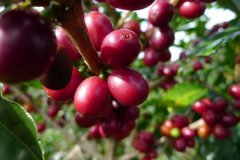
A coffee tree can harvest 3-5 kg of fruit, and raw coffee beans account for 1. 5% of the fruit quality. Going from fruit to raw coffee beans is really a time-consuming and laborious task. Arabian, Robusta and Liberian Arabian coffee account for about 2% of the world's coffee production. The plant is not suitable for high temperature, low temperature, more rain and less rain. Coffee beans are oval and flat, with high quality

Fruit to raw coffee beans
A coffee tree can harvest 3-5 kg of fruit, and raw coffee beans account for 1. 5% of the fruit quality. Going from fruit to raw coffee beans is really a time-consuming and laborious task. Arabian, Robusta and Liberian Arabian coffee account for about 2% of the world's coffee production. The plant is not suitable for high temperature, low temperature, more rain and less rain. Coffee beans are oval and flat, with high quality

Basic knowledge of high-quality coffee beans the production process of coffee beans
A coffee tree can harvest 3-5 kg of fruit, and raw coffee beans account for 1. 5% of the fruit quality. Going from fruit to raw coffee beans is really a time-consuming and laborious task. Arabian, Robusta and Librian Arabian coffee account for about 2% of the world's coffee production. The plant is not suitable for high temperature, low temperature, more rain and less rain. Coffee beans are oval flat and have a high height.

A coffee tree can produce about 3-5 kg of coffee cherries.
A coffee tree can produce about 3-5 kilograms of coffee cherries and can be refined into one-fifth of the weight of green coffee beans. Among them, coffee cherries are transformed into green coffee beans by many hands and time. Arabica and Robusta Arabica accounts for about two-thirds of the world's coffee production and is not suitable for growing in areas with high temperature, low temperature, much rain and little rain. The beans are oval and flat

Red cherry plans to sunburn the pineapple Yejiaxuefei how to flush the Japanese ice hand to Yega?
Professional coffee knowledge exchange more coffee bean information please follow the coffee workshop (Wechat official account cafe_style) this is the latest single coffee on the new, let me the most pleasant surprise one, Gedeo Zone2018 red cherry project, due to the previous Rain Water too much, the new production season of Yega Xuefei coffee maturity delayed about 3 weeks, these 3 weeks to a certain extent increased the sweetness of coffee fruit, so

Flavor description of Antigua Coffee beans in Guatemala
Taste description of Antigua Coffee beans Antigua Antigua (Antigua) is a first-class coffee growing area with volcanic soil and plenty of sunshine, Rain Water. Every 30 years or so, the area near Antigua is hit by a volcanic eruption, which provides more nitrogen to the already rich soil, which makes Antigua coffee very soft.

Is the coffee made in the sun in Sidamovaka good? the amount of hand-brewed coffee powder in Sidamoka is recommended
For more information on coffee beans, please follow the Coffee Workshop (Wechat official account cafe_style). This Sidamo coffee is of Ethiopian nationality and native to Sidamo. He was educated in the Waka Cooperative and became a better coffee bean. Washed Sidamovka Werka comes from the small town of Werka in southern Ethiopia, this exquisite

The taste of the coffee in Santa Cruz Manor, Ecuador is very balanced and refreshing.
Ecuador is divided into the western coast, the central mountains, the eastern Amazon River basin and the four central regions of the Galapagos Islands, with diverse climatic conditions. The western coastal plain belongs to the tropical rain forest climate, with an average temperature of 23-25 ℃. The central Andes. The intermountain basin in this area belongs to the savanna climate, and the mountain belongs to the subtropical forest climate, with perennial snow above 4000 meters above sea level. Annual average decline

Get to know the Coffee from six Central American countries: a detailed introduction to Guatemala Coffee beans
The temperature of Guardiola is about 15 degrees. Because of the long mountains and the great climatic changes in the region, Guardiola has created eight major coffee producing areas in the country, all located on the highland topography under tropical weather. The rainfall is stable, the fertile volcanic ash soil is in a good environment, and the coffee beans produced are all Arabica, each with different flavor and characteristics, and the first-class sour taste and fruit.

Introduction of coffee flavor and taste characteristics of Esmeralda Manor in Panama with unique forest climate
Species of Geisha were discovered in the Rose Summer Forest of Ethiopia in 1931 and sent to the Coffee Research Institute in Kenya, introduced to Uganda and Tanzania in 1936, introduced to Costa Rica in 1953, and Panama was introduced in the 1970s by Mr. Francico Serraxin of the Tonba Seven Farm Garden from CATIE in Costa Rica and began to grow Rose Summer Coffee. G

Description of the characteristics and Flavor of Columbia Linglong Coffee Bean introduction to the treatment method of manor production area
Description of the characteristics and flavor of Columbia Linglong coffee beans the manor area treatment method introduces the plant origin of the species and the varieties of coffee, the rain patterns produced by the climate of the coffee growing area and the convergence of the tropics, the ever-changing topography, luminosity, favorable temperature range throughout the year, moderation and Rain Water's distribution, including selective logging and transformation.

Guatemala Atitlan San Pedro (San Paito Manor) A detailed introduction to the eight manors
Atitlan San Pedro (Saint Pedro Manor) SHB Guatemala has extensive mountains and regional climate change, which has created eight major coffee producing areas, all located in alpine terrain / rich and stable rainfall / fertile pozzolanic soil in the subtropical climate. All coffee beans are Arabica varieties, each with different flavors and characteristics, excellent sour taste and fruity flavor, belonging to